

We have selected ten flagship products available from Thomann, directly related to piano playing (digital pianos, controller keyboards and accessories). For each product, we present an in-depth description (piano playing and technical aspects) and list its strengths/weaknesses. We also suggest where to place an affiliate link to Thomann.
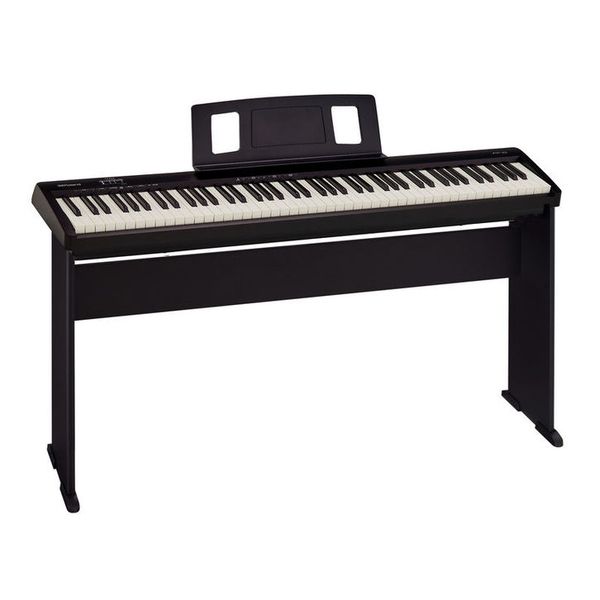
Roland FP-10 (portable digital piano)
The Roland FP-10 is a compact digital piano with 88 weighted keys and PHA-4 Standard hammer action. It offers a very realistic playing experience (graded dynamics and aftertouch) in a lightweight format (12.3 kg). Its SuperNATURAL sound engine provides 4 acoustic piano samples, 2 electric pianos and other sounds (organs, strings, etc.). It also includes useful features (Twin Piano, Layer/Split modes, metronome, Bluetooth MIDI to control a DAW). This entry-level model offers excellent value for money for pianists: solid (a reputable Roland stage piano), easy to transport and ideal for personal practice or acoustic performances.
- Strengths: authentic touch (PHA-4, aftertouch) and natural sounds via SuperNATURAL. Decent polyphony (96 voices) for a compact model. Modern features (Twin Piano, wireless Bluetooth MIDI). Robust Roland build quality, sustain pedal included.
- Weaknesses: modest built-in speakers (only 2×6 W), too weak for a large space. Not negligible weight for a “portable” model (12 kg). Limited polyphony when playing dense pianissimo passages (96 voices). Very basic features (no recorder or dedicated app).
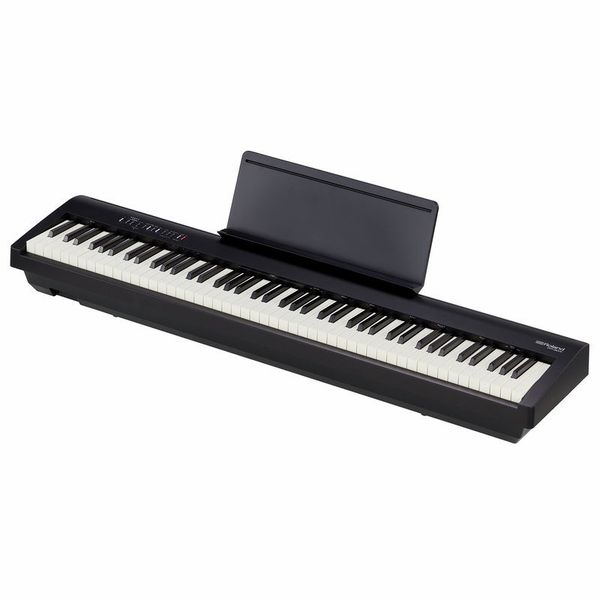
Roland FP-30X (advanced portable digital piano)
The Roland FP-30X is the evolution of the FP-30: 88 Ivory Feel keys (PHA-4) with graded hammer action and synthetic ivory surface. Its enhanced sound engine offers 12 SuperNATURAL acoustic pianos, 20 electric pianos and 24 other sounds (strings, organs, synths). It doubles the polyphony (256 voices) compared to the FP-10, and includes more powerful speakers (2×11 W) for playing without an amp. You can play classical or pop styles, or play as a duo (Dual/Split/Twin modes). It also offers MIDI/USB recording features and audio playback (WAV/MP3 files) via USB stick. From a musician/pro perspective, this keyboard can handle a wide range of songs and styles.
- Strengths: high-end keyboard action (PHA-4 Ivory Feel) and large polyphony (256 notes). Rich sound palette (12 pianos, 30 accompaniment songs). Powerful built-in speakers (2×11 W) suitable for a living room or small studio. Complete connectivity (Bluetooth Audio/MIDI, balanced audio outputs, dual headphone output). Supplied with sustain pedal and music rest.
- Weaknesses: heavier and bulkier (14.8 kg, 1.30 m wide) – less portable. Higher price (~€649) than entry-level models. No triple pedal included (only the DP-2 sustain pedal is supplied). For recording, the lack of external stereo audio input may be noticeable.
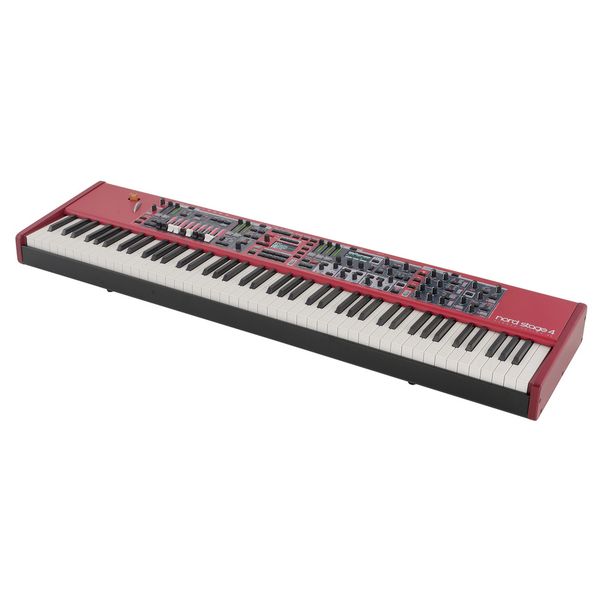
Clavia Nord Stage 4 88 (stage synth-piano)
The Nord Stage 4 88 is a professional stage keyboard, designed for live performance. It offers 88 weighted keys with aftertouch and three independent sound sections (Piano, Organ, Synth) that can be controlled in real time. The piano section includes many acoustic and electric piano samples (120 voices max) with 2 GB of memory (grand piano sounds, upright piano, electric pianos). The organ section offers 6 organ models (B3, Vox, Farfisa, etc.) with LED drawbars and rotary speaker simulation. The synth section includes the Nord Wave 2 engine (analog, FM, samples) with 3 sound layers and an advanced arpeggiator. It also includes a complex effects section (reverb, delay, modulation, compressor, etc.). The dedicated interface (OLED screens, wooden wheels, separate controls by layer) provides instant control. This multi-section keyboard is ideal for a live musician who needs to switch instantly between piano, organ and synth sounds, or even layer them.
- Strengths: outstanding sound quality and build quality (Nord’s reputation). Three cutting-edge sound engines and independent part management. Excellent Nord keyboard action, live-friendly interface (6 organ drawbars, 2 OLED screens, dedicated buttons). Extreme versatility (pianos, organs, synths) in a single instrument. Supplied with sustain pedal.
- Weaknesses: very high price, several thousand euros, aimed at professionals. Significant weight and dimensions (~20 kg), less portable. Can be complex for beginners – a long-term investment to make profitable. No built-in speakers (line outputs only), which may require external sound equipment.
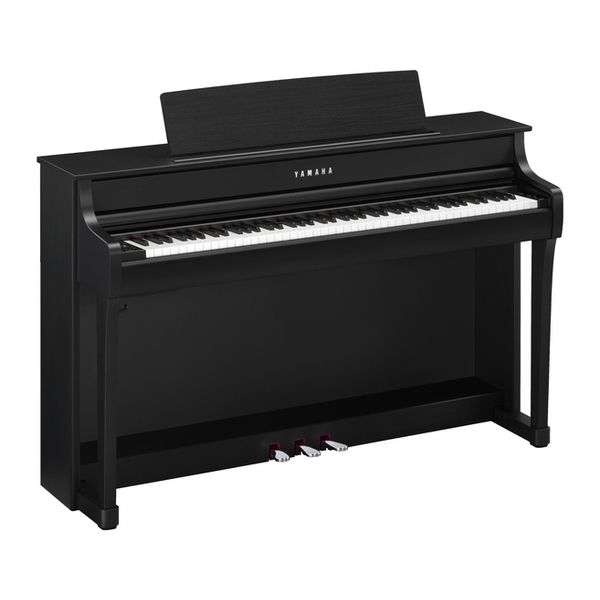
Yamaha CLP-845 B (living room digital piano)
The Yamaha CLP-845 (Clavinova) is a high-end “furniture-style” digital piano. It features 88 keys with Grand Touch-S action, synthetic ivory keytops and escapement (simulation of the hammer release feel). Its sounds include the prestigious Yamaha CFX and Bösendorfer Imperial samples, as well as 38 voices in total. It offers multi-layer MIDI recording and WAV audio playback, numerous rhythm patterns, and 256-note polyphony. Its sound power is exceptional: 3 amplifiers of 45 W each, for deep bass and clear highs. It includes a 3-mode triple pedal unit (soft, sostenuto, sustain), very close to a traditional piano. The CLP-845 is ideal for demanding pianists at home: it combines the touch of a real piano (wooden keyboard) with the rich sound of a concert instrument.
- Strengths: unmatched Grand Touch-S feel (velocity gradation, synthetic ivory, escapement). Realistic sound with large Yamaha samples (CFX, Bösendorfer) and wide polyphony. Powerful sound system (2×45 W + 45 W) to fill a living room. Advanced features (multitrack recording, Bluetooth audio/MIDI, complete connectivity). Elegant furniture-style design (matte black).
- Weaknesses: very heavy (60 kg) and bulky – fixed installation recommended. High price, several thousand euros. Not portable at all. Better suited to enthusiasts or semi-pros than beginners. Requires a furniture setup and possibly virtual tuning to take full advantage of all settings (Virtual Technician).
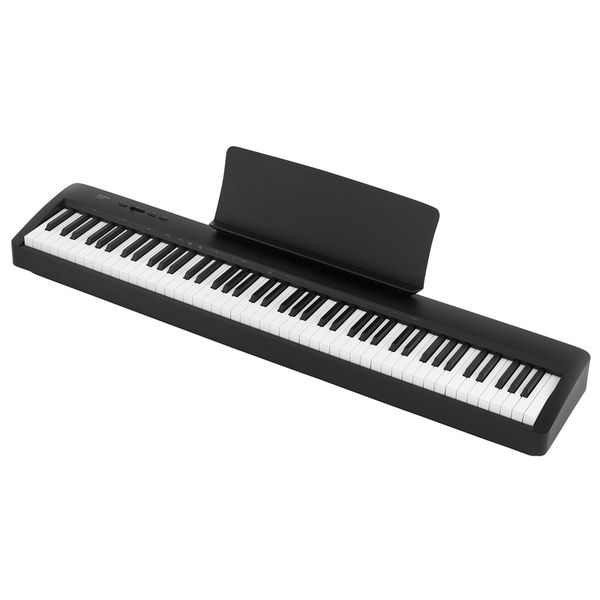
Kawai ES-60 (compact digital piano)
The Kawai ES-60 is a compact digital piano with 88 weighted keys, designed to offer a good performance/price balance. It features Responsive Hammer Light (RHL) action, which provides a realistic graded touch across the entire keyboard range. The sounds include the Shigeru Kawai SK-EX concert grand piano (via Harmonic Imaging technology), as well as various electric pianos, organs and strings. This lightweight keyboard (11 kg) includes a sustain pedal and 20 W stereo speakers (2×10 W), sufficient for an office or small studio. The interfaces are simple (headphone output, line output, USB-MIDI port). It excels for beginners/intermediate players who want a real piano feel and good musicality without spending too much.
- Strengths: authentic “piano” touch despite the moderate price (RHL, triple-hammer sensors inspired by higher-end models). Natural Kawai SK-EX piano sound, without unwanted mechanical noise. Compact and portable (11 kg) thanks to a shallow design. Quiet key action. Dual/Split modes available, three reverbs.
- Weaknesses: limited polyphony (192 voices) if playing very dense passages. Modest speakers (2×10 W), not suitable for large rooms. No Bluetooth (neither audio nor MIDI). Plastic construction on some elements, less refined than a furniture-style model. Fewer built-in sounds (only 17 voices, no arpeggiator or automatic styles).
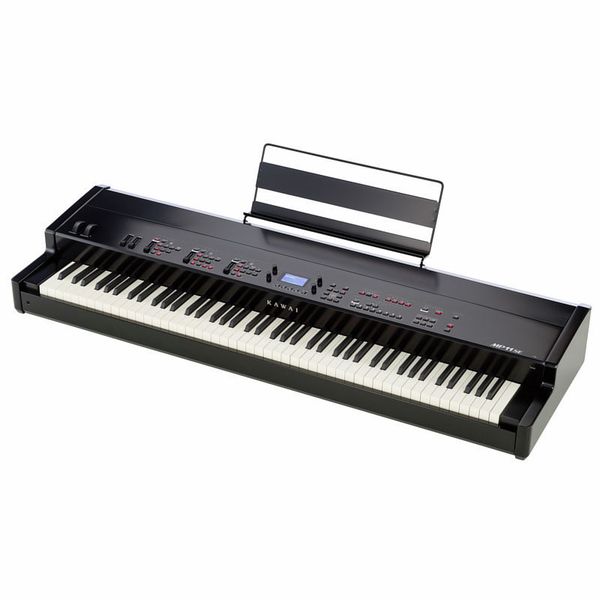
Kawai MP-11 SE (professional stage piano)
The Kawai MP-11 SE is Kawai’s flagship “stage piano”, designed for professional pianists. It features the Grand Feel keyboard action: 88 full-length wooden keys, graded hammers, counterweights and escapement (similar to a grand piano), with a non-slip IvoryTouch surface. The sounds include Kawai’s SK-EX, SK-5 and EX concert grands (sampled in 88-key stereo) via Harmonic Imaging XL. There are 40 sounds in total (pianos, classic EPs, strings, basses, etc.), with 256-note polyphony. The MP-11 SE is built for live performance: clear interface (3 sections: Piano, E.Piano, Sub), flexible effects, USB connection and triple pedal unit included (optical, sturdy connection). In short, it is one of the keyboards that comes closest to a real acoustic piano in terms of touch and expressiveness.
- Strengths: ultimate Grand Feel touch (wooden keyboard with triple sensor) offering a faithful pianist response. High-fidelity sound system (Harmonic Imaging XL, 3 sampled grands) for exceptional realism. Professional features (user setups, memory, USB audio, 4-zone MIDI controller). Robust metal construction for the stage. Complete triple pedal unit included.
- Weaknesses: very expensive (>€2000). Very heavy and bulky (34 kg). Complex to use for beginners (many editable parameters via Virtual Technician). No built-in speakers: requires external sound equipment. Its price clearly makes it suitable for professionals or conservatories.
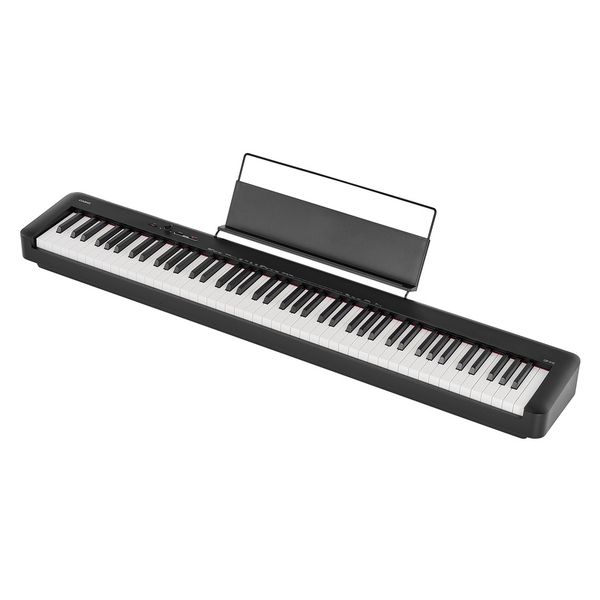
Casio CDP-S110 BK (ultra-compact digital piano)
The Casio CDP-S110 is a very compact and affordable digital piano (≈ $289) designed for beginners and amateur players. It has 88 Scaled Hammer Action II keys with simulated Ebony/Ivory textures to prevent slipping. With its shallow depth (23.2 cm), it fits on a table and can even run on batteries (ideal for playing anywhere). It offers 6 basic piano voices (plus a few keyboard sounds) to vary the playing experience. Its 10 sounds (grand piano, EP, etc.) are velocity-sensitive, and two sounds can be layered in Dual mode. It includes a metronome, a basic MIDI recorder (22 to 255 BPM) and audio recording. The built-in 2×8 W speakers are sufficient for practicing at home. In short, it is a very practical entry-level instrument for learning piano with a real touch feel (simulated weighted keys) and the ability to play silently via the headphone output.
- Strengths: ultra-portable and affordable. Weighted keyboard with graded piano-style touch. Can run on batteries (AA batteries), so it can be used without mains power. Headphone output to avoid disturbing others. Slim design (232 mm deep) thanks to miniaturization, practical for apartments. Ideal as a first digital piano.
- Weaknesses: limited polyphony (64 notes, which can cut off sound if you play too long). Very weak speakers (2×8 W) – headphones or an amp will be needed for comfortable listening in a large space. Few sounds (only 10 voices, no rhythms or accompaniments). Lightweight Slim keys, so the feel is less authentic than a real piano (and no escapement). Very basic structure (no screen, no advanced connectivity).
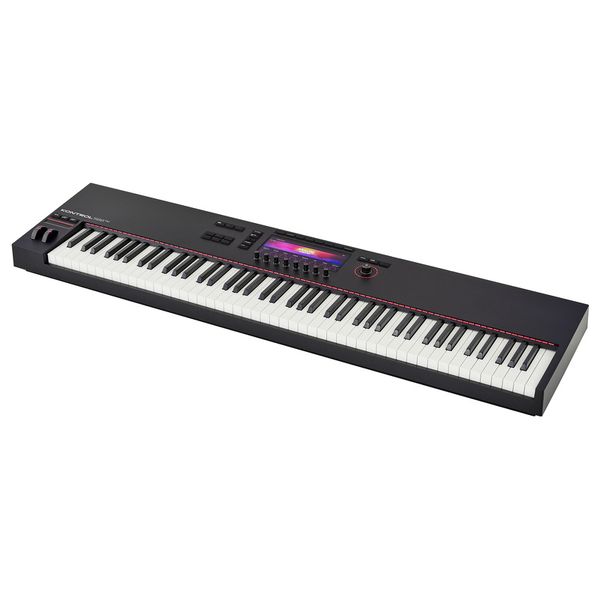
Native Instruments Komplete Kontrol S88 MK3 (88-key controller keyboard)
The NI Komplete Kontrol S88 MK3 is a studio-quality 88-key weighted master keyboard (MIDI controller). Its Fatar keyboard with polyphonic aftertouch offers a weighted feel, close to a real piano, but it is a controller with no internal sounds. It is optimized to control Native Instruments’ Komplete software (and thousands of NKS-compatible plugins). It includes a large high-resolution color screen and 8 touch-sensitive knobs to control virtual instruments, as well as a Light Guide (RGB LEDs above the keys) to display chords/key zones and presets. Its main strength is its deep integration: tag-based browsing in the Komplete sound library, synchronized key lighting, and advanced compatibility with DAWs (Ableton, Logic, Cubase, etc.). It is a very powerful music production tool for composing and playing with virtual instruments.
- Strengths: excellent keyboard quality (88 weighted keys with aftertouch) for a controller. Advanced integration with Komplete (preset browsing, LED lights, plugin management). Screen and knobs make it easier to use. Very complete as a live/studio control surface (DAW, plugins, mapping). USB-C and MIDI connectivity. Ideal for studio/home-studio work.
- Weaknesses: no standalone sounds (without a computer or software, it does nothing). Technical use: aimed at musician-producers, not complete beginners. Quite expensive for a “simple” controller, considering that a computer/software is also required. Heavy to transport (being an 88-key keyboard) and bulky in a case.
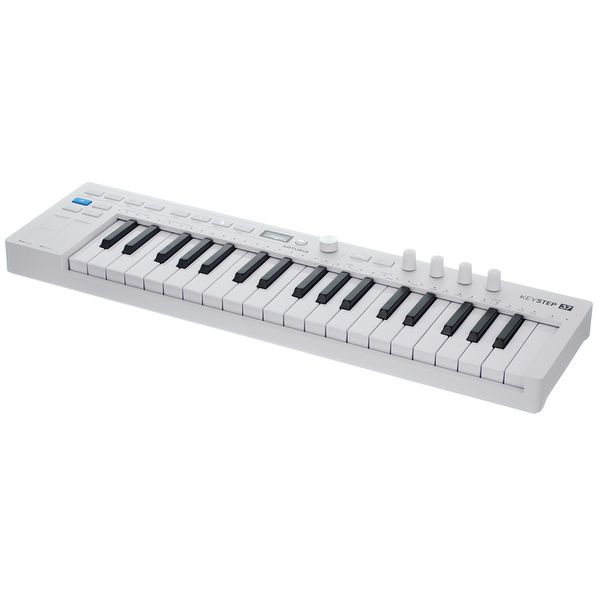
Arturia KeyStep 37 mk2 (37-key controller)
The Arturia KeyStep 37 mk2 is a small controller keyboard with 37 velocity-sensitive mini keys (with aftertouch). It includes a 64-step polyphonic sequencer (8 notes per step), a 16-mode arpeggiator with chord/scale/mutate functions, and three touch sliders to modulate sounds live (gate, spice, dice). It also offers 4 CV/Gate outputs to control analog modules, as well as MIDI DIN. It is extremely compact and lightweight (1.09 kg), ideal for mobile setups or for controlling software/hardware synths. The OLED screen and encoders allow you to navigate through sequencer and pattern settings. It is a creative tool for easily adding sequences and arpeggios in a piano/keyboard context.
- Strengths: very portable, it fits in a bag. Advanced features (sequencer, arpeggiator, modulators) integrated into a minimal format. Full MIDI/CV control, useful for hardware (modular) or software. Ideal for improvising or composing on the go. Affordable price (≈ €169) for these features.
- Weaknesses: non-weighted mini keys (lighter than a real piano). Only 37 keys (no full register). The screen is small, ergonomics are less immediate than on a larger keyboard. Designed for musicians familiar with computer-based music production: the user must manage sequencing and synchronization.
Accessories
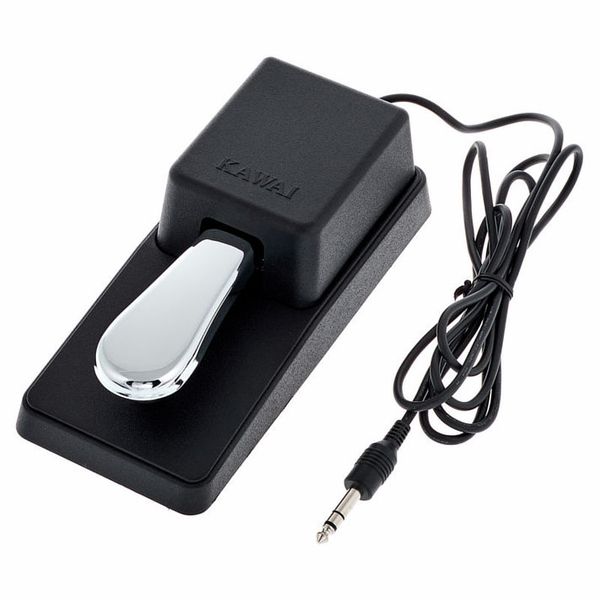
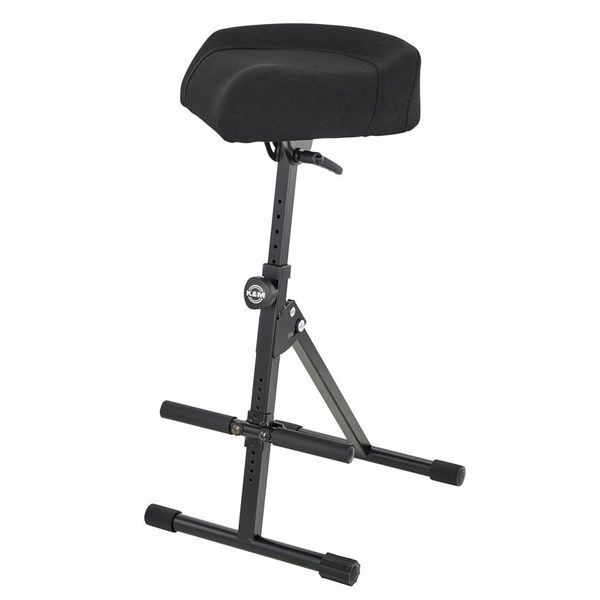
To complete a piano setup, we can also mention useful accessories (bench/music rest/pedal). For example, a stable height-adjustable piano bench (K&M or Gewa) improves playing comfort. Likewise, a sturdy music rest and a quality sustain pedal (e.g. Kawai F-10 H) extend the experience.